
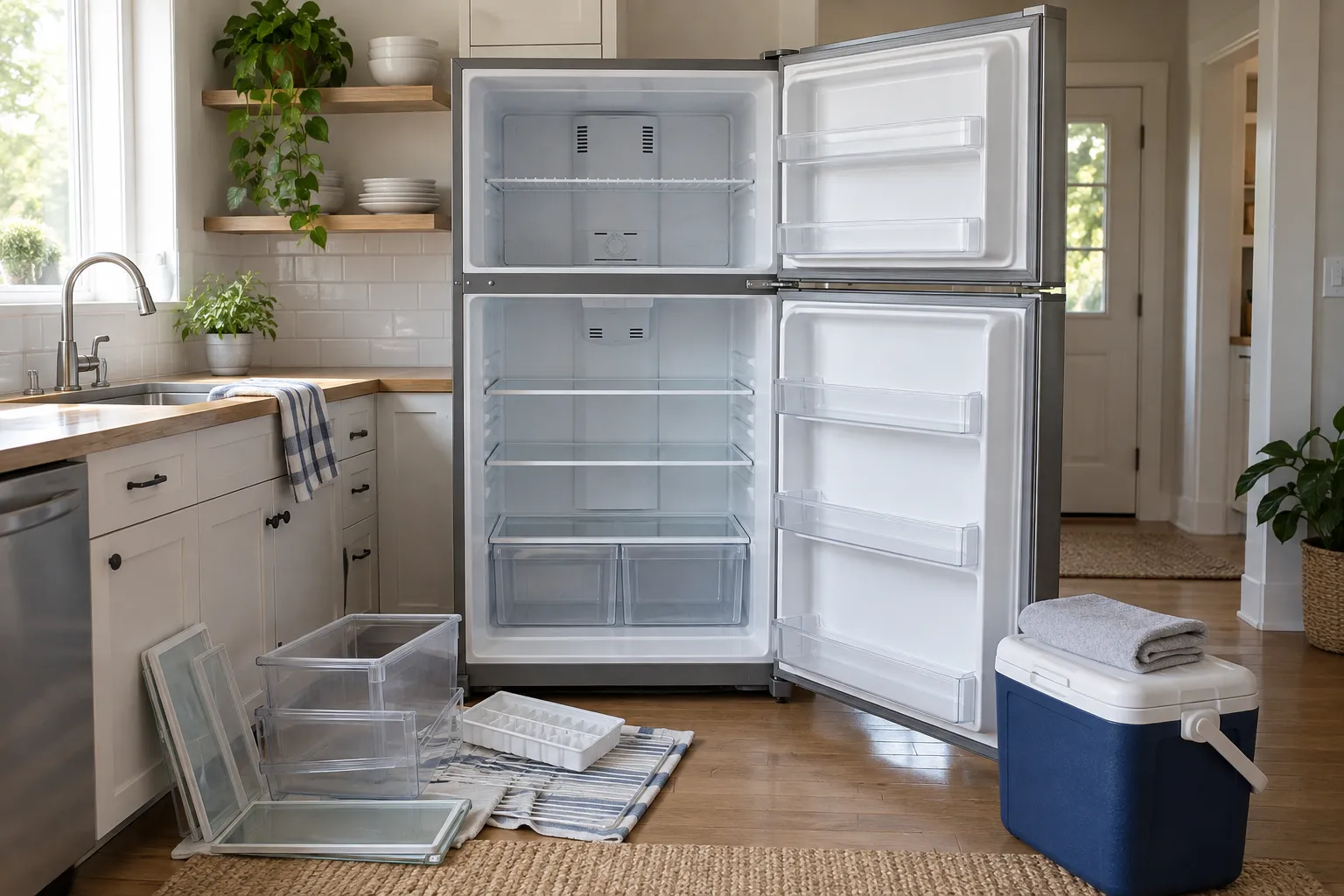
Empty the refrigerator, turn it off according to the manufacturer’s instructions, manage meltwater, secure loose parts, and clear a route wide enough for the appliance and moving equipment. Do not cut refrigerant lines or remove the compressor. Tell the pickup provider about stairs, tight turns, leaks, damage, and whether the unit is already disconnected.
A practical preparation timeline
The right timing depends on the refrigerator and the pickup window. Start by reading the owner’s manual. Some models have water lines, ice makers, smart displays, or built-in panels that need extra steps.
| When | What to do | Why it helps |
|---|---|---|
| When scheduling | Send a photo, dimensions, floor level, doorway notes, and connection details. | The estimate and equipment plan are based on the real route. |
| Before unplugging | Move food to a cooler or another refrigerator. Remove ice and liquids. | A dry, empty unit is safer and cleaner to handle. |
| After shutdown | Follow the manual for defrosting. Use towels or a shallow pan for water. | Meltwater can damage flooring and create a slip hazard. |
| Before pickup | Remove or secure shelves, bins, cords, and loose accessories. | Loose parts can shift, break, or catch on the route. |
Refrigerator pickup checklist
- Confirm whether the unit is freestanding, counter-depth, built-in, or panel-ready.
- Remove food, ice, liquids, magnets, and items stored on top.
- Follow the manual for shutting off the ice maker and water supply.
- Arrange safe water-line disconnection if you cannot do it confidently.
- Defrost the freezer and dry the interior.
- Secure the power cord and removable shelves or bins.
- Measure the appliance body and the narrowest opening on the route.
- Clear rugs, shoes, furniture, decorations, and pet gates.
- Photograph existing dents, leaks, or floor damage that could affect handling.
- Keep children and pets away from the appliance and work path.
Leave refrigerant components alone
Refrigerators, freezers, window air conditioners, water coolers, and some dehumidifiers contain refrigerant. The U.S. Environmental Protection Agency tells consumers not to tamper with an appliance before disposal, including cutting refrigerant lines or removing compressors. The final disposal chain has requirements for refrigerant recovery and hazardous components.
San Joaquin County also notes that major appliances can contain refrigerant, mercury, oils, and other regulated materials. Use an accepted disposal path and describe any damage or missing parts when arranging pickup.
Sources: U.S. EPA appliance disposal guidance, U.S. CPSC refrigerator safety guidance, and San Joaquin County appliance guidance. Retrieved September 21, 2026.
What to send with your pickup request
A useful message includes the refrigerator type, approximate width and height, whether it is empty and disconnected, the floor level, the number of steps, and the narrowest doorway. Add one photo of the full appliance and one photo of the hardest part of the route.
See the refrigerator removal page for scope and estimate factors. If you also have a freezer, the freezer preparation guide covers ice and meltwater.
 Call now